
Understanding Forex Margin Calls for Kenyan Traders
📉 Learn how margin calls affect your forex trades and how to manage risks effectively. Essential tips for Kenyan traders to protect investments in the market.
Edited By
Henry Collins
Forex trading, or foreign exchange trading, involves buying and selling currencies to profit from their price movements. For Kenyan traders, understanding the basics can open doors to a global market where daily turnover exceeds $6 trillion worldwide.

Unlike stock markets, forex operates 24 hours from Monday to Friday, spanning multiple time zones. Trades happen directly between parties, often through brokers. In Kenya, many use online platforms integrated with M-Pesa for seamless deposit and withdrawal of funds.
Currencies are traded in pairs, such as USD/KES (US dollar against Kenyan shilling). The first currency is the base; the second is the quote currency. The price shows how much of the quote currency you need to buy one unit of the base.
Pip: The smallest price change in a currency pair, usually 0.0001 for most pairs.
Leverage: Borrowed capital to increase trade size but amplifies risks.
Spread: The difference between buying (ask) and selling (bid) price.
Lot: A standardised trade size, often 100,000 units of the base currency.
Many brokers accept M-Pesa for funding accounts, making transactions quick and secure. It’s important to choose brokers regulated by trusted authorities to avoid scams.
Also, be mindful of the Kenyan economy’s influence on USD/KES rates. Factors like inflation, Central Bank of Kenya policies, and political events can cause fluctuations.
Understand market timing tied to major centres like London and New York, as they impact currency volatility the most.
Open a demo account to practise without risking real money.
Learn to read charts and understand technical indicators.
Start small with minimal leverage.
Develop a risk management plan, such as setting stop-loss orders.
This practical approach ensures you build skills steadily while managing risks common in forex trading.
Grasping the workings of the foreign exchange (forex) market is essential for any Kenyan trader who wants to participate confidently and wisely. Forex is where currencies from different countries are exchanged and priced against one another. A clear understanding helps you anticipate market moves, manage your trades prudently, and avoid costly mistakes. For example, knowing how the US dollar affects the Kenyan shilling can guide when to buy or sell currencies.
Forex trading is simply buying one currency and selling another at the same time. The goal is to profit from the changes in the exchange rate between the two currencies. Think of it as exchanging Kenyan shillings (KES) for US dollars (USD) today and selling those dollars later for more shillings if the rate moves in your favour. Unlike stocks, forex operates 24 hours a day across global financial centres, offering flexible trading times for Nairobi-based traders.
Currencies are traded in pairs, such as USD/KES or EUR/USD. This means when you buy one currency, you simultaneously sell the other. The price quoted tells you how much of the second currency you need to buy one unit of the first. Trades happen over the counter (OTC), meaning directly between parties or through brokers, rather than in a central exchange. For Kenyans, platforms offering M-Pesa deposits connected to trusted brokers facilitate seamless trade execution.
Forex trading relies heavily on real-time rates influenced by global events, economic reports, and market sentiment. Keeping up with news from the Central Bank of Kenya or global markets can provide valuable signals.
Some currency pairs move the most and attract the most trading activity due to their liquidity and economic influence. These include:
EUR/USD (Euro against US dollar) — the most traded pair worldwide.
USD/JPY (US dollar against Japanese yen) — sensitive to Asian market conditions.
GBP/USD (British pound against US dollar) — influenced by UK and US economic reports.
USD/KES (US dollar against Kenyan shilling) — crucial for local traders monitoring import/export and remittance flows.
Knowing these pairs helps you focus on markets with better price action and tighter spreads, saving on trading costs. For instance, Kenyan importers watching USD/KES rates to manage costs or forex traders speculating on global movements need to pay close attention to these pairs.
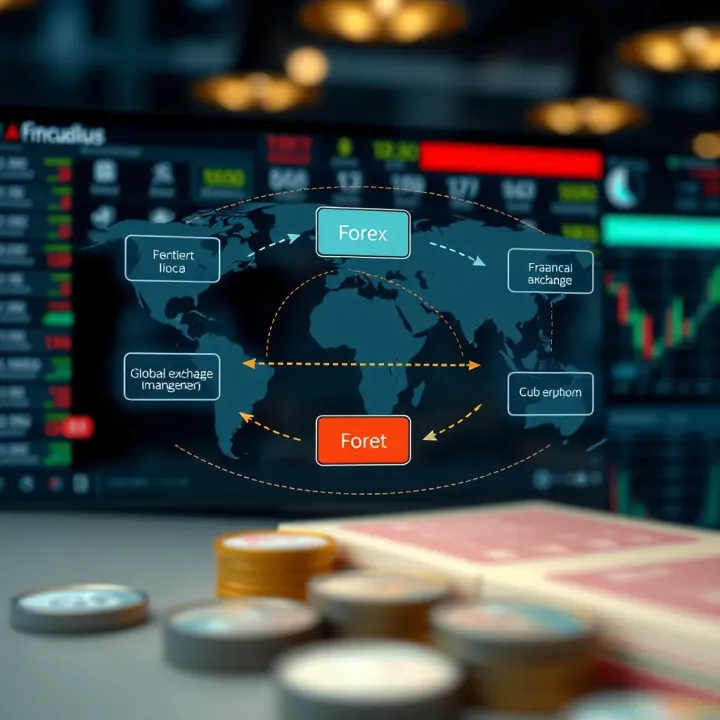
Understanding the forex market’s structure and major players sets a firm foundation for practical trading and informed decision-making in Kenya’s dynamic financial environment.
For anyone starting out in forex trading, getting familiar with the key terms can save plenty of headaches down the road. Understanding these basics helps you make smarter decisions and avoid costly mistakes. In Kenya, where forex trading is growing rapidly, knowing the language of the market is just as important as knowing how to place trades.
A pip (percentage in point) is the smallest price move in a currency pair, often the fourth decimal place. For example, if the USD/KES rate moves from 110.2500 to 110.2600, that’s a one-pip change. Pips measure profit or loss — traders usually watch pip movements closely.
A lot represents the size of your trade. The standard lot equals 100,000 units of the base currency. However, most brokers offer mini lots (10,000 units) and micro lots (1,000 units), making it easier for beginners to start with smaller amounts. For instance, trading one mini lot of USD/KES means controlling 10,000 US dollars.
Leverage lets you control a larger position with a smaller deposit, magnifying gains — and losses. Say you use 50:1 leverage, meaning KSh 2,000 in your account allows you to trade KSh 100,000 in the market. While leverage can boost profits, it also increases risk, so be careful not to overextend yourself.
The bid price is the price buyers are willing to pay for a currency pair, while the ask price is the price sellers want. The difference between these two is called the spread, a cost that traders must consider.
For example, if EUR/USD bid is 1.1200 and ask is 1.1203, the spread is 3 pips. Brokers earn from the spread, so tighter spreads mean lower trading costs. In Kenya, some brokers offer lower spreads on major pairs to attract more traders.
Knowing the order types is key to managing your trades effectively:
Market Order: Buy or sell immediately at the current market price.
Limit Order: Set an entry point better than current price; trade executes only if that level is reached.
Stop Order: Triggered when the price hits a certain level; often used to limit losses (stop-loss) or enter a trade after a breakout.
For instance, if USD/KES is at 110.25 and you believe it will rise, you might place a limit buy order at 110.00 to enter the market at a lower price. Stop orders help protect your capital by automatically closing trades when the market moves against you.
Grasping these key terms—pips, lots, leverage, bid, ask, spread, and order types—forms the foundation of sound forex trading. With this language, you can better navigate platforms and make trading choices that fit your goals and risk tolerance.
Starting forex trading in Kenya requires clear steps to ensure you begin on the right footing. These practical steps help you navigate the market smoothly, avoid common pitfalls, and make the most of available local resources, such as M-Pesa for payments. Kenya’s growing forex community means more brokers and services, but not all are trustworthy. So, focusing on reliable sources and proper account setup is essential.
Picking a good broker is your first priority. A reliable forex broker must be licensed and regulated, ideally by recognised bodies such as the Capital Markets Authority (CMA) in Kenya or reputable international regulators like the Financial Conduct Authority (FCA). This ensures your funds are protected and trades executed fairly. For example, brokers like FXPesa and HotForex offer localised support and accept M-Pesa as a deposit method, making them popular among Kenyan traders.
Watch out for brokers offering unrealistically high leverage or bonuses without clear terms. Also, check the trading platform they use — MetaTrader 4 (MT4) and MetaTrader 5 (MT5) are widely preferred for their usability and reliability.
Once you identify a trusted broker, the next step is opening a trading account. This usually involves submitting identification documents like your national ID or passport, proof of residence, and sometimes income evidence. The account type matters too — standard accounts suit most beginners, but if you want to trade smaller amounts, a mini or micro account might be better.
Depositing funds is usually straightforward. You can fund your account through bank transfers, card payments, or mobile money. Many brokers accept amounts starting from as low as KSh 1,000. Remember, keeping your investment manageable means starting small until you’re comfortable with trading.
In Kenya, M-Pesa is the go-to payment method for forex deposits and withdrawals. It’s fast, secure, and familiar to most traders. Brokers that accept M-Pesa minimise delays, allowing you to move money quickly and without unnecessary bank charges. For example, FXPesa’s wallet supports direct M-Pesa transactions for smooth deposits.
Other payment options include bank transfers and international cards (Visa, MasterCard). Still, these may take longer or involve extra fees. Some brokers also support Lipa Na M-Pesa, which offers an easy way to fund accounts directly from your mobile phone.
Tip: Always confirm with your chosen broker which payment methods they support and the associated charges, if any, before funding your account.
By following these steps — selecting a licensed broker, setting up your trading account properly, and using convenient payment methods like M-Pesa — you lay a solid foundation for your forex trading journey.
Starting out in forex trading without clear strategies and risk management is like driving in Nairobi traffic without knowing the routes — you’re bound to get stuck or lose a lot. Simple trading strategies give you a structured approach, while risk management prevents you from losing more than you can afford. Both are essential to preserve your capital and build confidence, especially when the market is unpredictable.
For beginners, sticking to straightforward tactics helps avoid confusion. One reliable approach is the trend-following strategy. This means you identify the general direction a currency pair is moving — up or down — and trade in that same direction. For instance, if the USD/KES is consistently rising over a few days, you might buy expecting the trend to continue. Another is the breakout strategy which involves entering trades when prices move beyond a key support or resistance level. It’s like when Nairobi streets get congested, and once the blockage clears, cars start moving fast; you want to jump in just as the price breaks out.
Risk management is your shield against heavy losses. Most importantly, never risk more than 2% of your trading capital on a single deal. Suppose you have KSh 50,000 in your account; risking KSh 1,000 per trade protects you from wiping out your balance quickly. Always use stop-loss orders — these automatically close your trade if the market moves against you beyond a set point. Also, diversify by trading different currency pairs instead of putting all your eggs in one basket. Kenya’s forex scene allows tools like M-Pesa for quick deposits, but don’t let easy access to funds tempt you into reckless trading.
Emotions like fear and greed often mislead new traders. After one or two losses, some rush to recover their losses by increasing bet sizes; others hold onto losing trades hoping the market will turn. This behaviour leads to bigger losses. Practising discipline means sticking to your trading plan and your risk limits even when the market looks tempting or scary. Keep a trading journal to review your decisions and spot patterns in your emotional reactions. Having this kind of self-awareness helps you trade calmly, just as a seasoned boda boda rider stays alert but composed during rush hour.
Remember: Successful trading is not about making quick money but about consistent, controlled steps. Your capital is your business’s lifeline; protect it wisely.
Together, simple strategies, solid risk management, and emotional control form the foundation every Kenyan forex trader should build on.
Knowing what moves currency prices can help Kenyan traders spot opportunities and protect their investments. Exchange rates don’t just change by chance — they respond to real-world events and data. This section looks closely at the main factors behind these price shifts to give you clearer insights when trading forex.
Economic indicators are statistics about a country's economic activity and health, which traders closely watch. Data like GDP (Gross Domestic Product), inflation rates, unemployment figures, and trade balances can cause significant swings in currency values. For example, when the Kenya National Bureau of Statistics releases strong GDP growth numbers, it can boost the Kenyan shilling as confidence in the economy rises. Conversely, rising inflation may weaken the shilling because it erodes purchasing power.
Understanding these indicators means you can anticipate possible market reactions. Say, if the U.S. reports higher-than-expected employment, the dollar may strengthen, affecting dollar pairs like USD/KES.
Politics and social stability influence investor confidence. Elections, policy changes, or unrest can disrupt markets. For instance, ahead of a general election in Kenya, the shilling may fluctuate due to uncertainty about the political outcome. Similarly, unexpected events like strikes or protests can also spook traders and push currencies down.
Regional developments count too. If there’s tension in East Africa, investors might prefer safer currencies, causing local currencies to slide. Tracking news and understanding political risk is essential for managing trades during such times.
Central banks like the Central Bank of Kenya (CBK) hold major sway over currency prices by controlling interest rates and money supply. A rate hike by CBK makes the shilling more attractive to investors seeking better returns, pushing its value up. Lower rates can have the opposite effect.
Besides interest rates, central bank policies on inflation and currency reserves impact forex markets. Decisions connected to foreign exchange reserves, such as interventions to stabilise the shilling, also cause price shifts.
Tip: Always watch central bank meetings and statements. These can trigger swift market moves.
In summary, currency prices react to concrete signals from economies, political climate, and central bank actions. Staying informed on these fronts equips you to make better trading decisions, manage risk, and spot when the market mood is about to change. For Kenyans trading forex, this localised understanding can make a real difference in navigating the volatile market.
📉 Learn how margin calls affect your forex trades and how to manage risks effectively. Essential tips for Kenyan traders to protect investments in the market.
📈 Discover how forex signals apps can help Kenyan traders spot trading opportunities, manage risks, and make smarter forex moves with local market insights. 🇰🇪
Learn how ExpertOption offers forex, crypto and commodity trading to Kenyans 🇰🇪. Understand steps, risks, tips and how to trade smartly with this platform 📈💡.

Learn about FXPro's minimum deposit for Kenyan traders 🇰🇪, payment options like M-Pesa, managing funds safely, and how it affects your forex account setup 💼📈.
Based on 14 reviews