

How to Become a Skilled Funded Trader
🔍 Discover what it takes to be a skilled funded trader in South Africa. Learn key trading skills, funding basics, risk strategies, and overcome challenges for success.
Edited By
Emily Cartwright
Funded trader competitions have become a practical pathway for aspiring traders to access significant capital without risking their own money. These contests, run by various prop trading firms, challenge participants to demonstrate their trading skills under specific conditions. Winners earn the chance to manage a funded account, trading with firm capital and sharing in the profits.
In Kenya, where access to trading capital can be a hurdle, these competitions offer an attractive alternative. They allow you to build experience and prove your abilities before committing large sums of your own money. Instead of borrowing or using personal savings, you trade within clearly defined limits and risk parameters set by the competition.
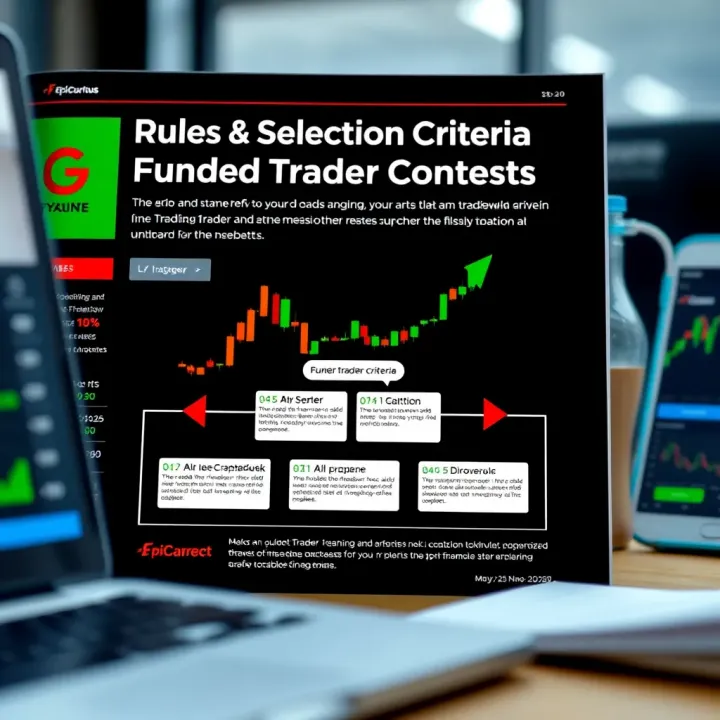
The process usually involves stages such as a qualifying round and verification phase. During these stages, you demonstrate a consistent and disciplined trading style, usually by meeting profit targets without breaching drawdown limits or other restrictions. For instance, a competition might require you to make a 10% profit within 30 days while limiting maximum daily losses to 3%. Passing these tests proves you can trade responsibly and consistently.
Typical rules you can expect include:
Maximum daily loss limits to control risk
Overall drawdown thresholds to prevent heavy losses
Minimum trading days to discourage reckless trading
Profit targets traders must reach to qualify
These contests also help Kenyan traders sharpen risk management, discipline, and trading psychology—skills crucial for long-term success. Additionally, many firms provide educational resources during competitions to support participants.
Understanding funded trader competitions equips you to decide if this route aligns with your trading ambitions. With clear rules and achievable targets, you can plan your strategies accordingly and increase your chances of advancement. This guide will help you navigate these competitions, so you can make informed choices while developing your trading career in Kenya.
Funded trader competitions open a door for many aspiring traders in Kenya and beyond who want to trade with real money but lack the capital. Instead of risking personal funds, participants compete to prove their trading skills. Those who succeed earn access to substantial trading capital provided by the competition organiser, often with profit-sharing arrangements. This setup makes such competitions a practical way to enter professional trading without upfront financial pressure.
A funded trader competition is essentially a contest where traders demonstrate their ability to manage risk and generate profits on a demo or trial account. Organisers aim to identify consistent, disciplined traders worthy of funding. For example, a Kenyan trader might join a challenge hosted by an international prop firm, competing remotely to meet profit targets within set timeframes. The goal is to find traders who can generate steady returns while respecting risk limits.
These competitions benefit both parties: traders get a chance to handle sizeable capital without personal exposure, while firms attract talent and market their services. It’s a practical model that replaces the need for traders to risk their savings or loans.
Unlike regular trading accounts funded solely by a trader's own money, funded trader competitions introduce an evaluation layer. Traditional trading requires supplying the full capital, exposing a trader to total risk. In contrast, competitions provide risk-free capital during the trial phases and only allocate real accounts to those who pass.
For instance, a trader using their KSh 100,000 savings in a typical account loses that money if trades do not go well. In a funded competition, they trade a simulated account reflecting real market conditions but lose no personal money during qualifying phases. This difference significantly reduces financial pressure and can help traders focus on strategy instead of fear.
Most funded trader competitions have multiple phases designed to test both profit-making ability and risk management. The first phase might require hitting a profit target within 10–20 trading days while keeping losses within strict limits. For example, a competition could demand a 5% profit target without exceeding a 3% drawdown.
Successful traders proceed to subsequent rounds that simulate live trading conditions more closely, sometimes with larger capital or additional constraints. Each round eliminates those who fail, ensuring only disciplined and skilled traders move forward.
Benchmarks in these competitions are clear and precise. Traders need to show consistent gains and control over losses according to predefined rules. Daily loss limits, maximum drawdowns, and minimum trading days are common benchmarks.
For example, a trader may be disqualified if they exceed a daily loss of KSh 20,000 or flee into high-risk trades just to meet profit targets quickly. Meeting these benchmarks proves that a trader can handle real money responsibly. Kenyan traders who follow these benchmarks can develop habits that boost their long-term success in the market.
Funded trader competitions not only test profitability but also discipline, risk control, and consistency — key qualities that define successful traders.
By understanding the structure and demands of these competitions, Kenyan traders can better prepare themselves to take part and improve their chances of gaining funded accounts.

Understanding who can take part in funded trader competitions and how to begin is key for anyone aiming to enter this space. Knowing the eligibility and preparation steps ensures you don't waste time on platforms or opportunities that may not suit your profile.
Funded trader competitions usually cater to a range of experience levels, but most expect participants to have some basic trading knowledge. For example, beginners might struggle if they don’t understand order types or risk management, which are often part of the competition rules. That said, some contests welcome traders still learning but assess them against clear benchmarks to gauge readiness. It is quite common to find competitions with a beginner-friendly phase before quickly moving to more challenging rounds, so you should be ready to demonstrate solid trading fundamentals.
Not all competitions allow traders from every country, so checking if Kenyan traders can participate is important. Factors such as financial regulations or platform policies can limit access. Yet, many platforms now open registrations widely, recognising the growing trading community in East Africa. It's worth noting that despite open registrations, some contests might exclude participants from specific regions due to legal constraints or payment method limitations. To avoid surprises, check the eligibility criteria on the competition’s website or reach out to their support to confirm whether Kenyan traders can join.
The platform hosting the contest strongly affects your experience and chances. You should look for platforms with clear rules, transparent evaluation methods, and good customer support. For instance, platforms like TopstepTrader or The5ers offer well-established competitions that many Kenyan traders find reliable. Additionally, consider the instruments traded—some platforms focus on forex, others on CFDs or indices—so pick one that matches your trading style.
To register, you’ll need to create a trading account on the platform and provide identification documents. Typically, platforms ask for a copy of your national ID or passport plus proof of address to comply with anti-money laundering rules. Preparing these documents in advance helps speed up the registration. Some platforms may also require you to connect your M-Pesa or mobile money account if they handle payouts locally. Ensuring your profile is complete and accurate avoids delays, letting you focus on practising before the competition starts.
Taking time to understand participation requirements and preparing properly can give you a significant head start in funded trader competitions, making the experience smoother and more rewarding.
Understanding what funded trader competitions offer is key to making the most of the opportunity. These competitions do more than just open doors to capital; they also shape a trader's skills, provide professional exposure, and can boost a trading career significantly. Knowing the rewards and the real benefits helps you weigh whether entering such contests is the right move for you.
Funded trader competitions typically provide capital by granting qualified traders access to proprietary trading accounts. For example, after passing evaluation rounds, you might receive a funded account with a capital pool that can range anywhere from KSh 1 million to several million shillings. This funding lets you trade without putting your own money at risk, which is especially important for new or growing traders who lack sufficient personal funds.
Platforms may allocate capital in tiers, starting you off with a smaller sum and increasing it as you prove your skills and maintain consistent trading performance. This setup mirrors real-world fund management, giving you a taste of trading with actual money but in a controlled environment.
Most competitions follow a profit-sharing model where you keep a percentage of the profits you generate from the funded account. Common splits might be 70/30 or 80/20, meaning you retain 70% or 80% of your profits respectively. This structure incentivises you to perform well while allowing the funding company to cover their risks and operational costs.
The profit split is crucial since it directly affects your earnings and motivation. For instance, if a trader makes KSh 100,000 profit in a month on a 70/30 split, they take home KSh 70,000 while the provider keeps KSh 30,000. Understanding these details lets you plan your trading goals and risk management accordingly.
Participating in these competitions gives you a platform to showcase your talent to prop firms and industry experts. Beyond the prize money and funded accounts, this exposure can lead to career opportunities such as invitations to join proprietary trading desks or firms that value proven track records.
Additionally, many platforms publish leaderboards or highlight top performers on social media and their websites. This visibility can help you build a reputation in Kenya's or even global trading communities, opening doors to mentorships and networking that are often hard to access.
The real benefit lies in trading with live capital under realistic conditions. Unlike demo accounts where outcomes don't affect real money, these competitions demand solid risk management because losses impact your funded status. This experience teaches discipline, emotional control, and adaptability—qualities that can't be fully developed through simulated trading.
For example, a Kenyan trader using a funded account learns to adjust strategies during volatile market conditions such as election periods or unexpected economic announcements. Such hands-on trading experience is invaluable in building skills and confidence needed for a professional trading career.
Access to funded trader competitions offers more than just money—it provides a practical learning ground and career stepping stone for Kenyan traders who want to grow beyond hobby trading.
Funded trader competitions bring the promise of capital without risking your own money, but they also come with their own set of challenges. Knowing these hurdles helps you prepare better and make smart decisions. This section focuses on the main risks you can face during these contests and how to handle them effectively.
One key challenge is adhering to drawdown limits and daily loss restrictions. Most competitions set strict rules about how much you can lose in a day or overall during evaluation. For example, a trader might be allowed a maximum 5% daily loss and a 10% total drawdown. Exceeding these limits means automatic disqualification, even if you are otherwise performing well. These rules exist to mimic real trading risks but can catch some off guard, especially new traders who might not expect such tight restrictions.
Handling stress and discipline is equally important. Trading under competition conditions creates pressure — knowing disqualification is just one bad day away can make emotions run high. It’s easy to feel rushed or panic after a loss. Successful competitors develop routines to stay calm, such as stepping away from the screen briefly or sticking strictly to their predetermined plans. Discipline helps avoid impulsive decisions that could lead to heavy losses or breaking the competition's rules.
Managing emotional responses and respecting risk limits is what separates top contenders from those who burn out early.
A common mistake is misunderstanding the competition rules. Some traders join without carefully reading terms, like limits on trading hours, instruments allowed, or profit targets. For instance, a rule might forbid trading during high volatility news events, but if you’re unaware, you risk penalties. Missing these details can lead to disqualification or wasted effort.
Another frequent issue is overtrading and emotional mistakes. After a loss, new traders sometimes try to quickly recover by increasing trade size or making risky plays. This overtrading can spiral into more losses and greater drawdown. Emotions like fear or overconfidence cloud judgement and lead to errors. Recognising these tendencies early and practising cool-headed trading improves your chances dramatically.
By understanding and preparing for these challenges, Kenyan traders increase their odds of success in funded competitions. Staying within risk limits, respecting the rules, and managing emotions make your trading approach professional and sustainable.
Success in funded trader competitions does not rely on chance but on preparation, strategy, and discipline. As these contests offer real capital and serious stakes, understanding how to approach them effectively is key. This section highlights practical tips that help participants perform consistently and meet competition demands.
Backtesting and practice are foundational steps before joining any funded trader competition. Backtesting involves running your trading strategy against historical market data to see how it would have behaved. This process helps you identify strong setups and avoid strategies that fail under certain conditions. For example, a trader focusing on forex might backtest a moving average crossover strategy against past Nairobi Securities Exchange (NSE) market cycles to check its reliability. Practise extends beyond backtesting; using demo accounts offers the chance to execute trades in real-time environments without risking capital.
Adapting to competition conditions is equally important. Each funded competition often has specific rules, like maximum daily losses or mandatory trading days, which might force you to tweak your strategy. If a contest limits the number of trades per day, relying on scalp trading won’t work well. Instead, adjusting to longer timeframes or targeting potential big moves could improve performance. Flexibility here ensures your approach stays effective within set boundaries.
Strict money management separates successful traders from those who fail under pressure. Many funded competitions impose tight drawdown limits to protect capital providers, meaning you must limit your losses strictly in proportion to your account size. For instance, if your daily loss limit is 2%, you shouldn’t take trades risking more than 0.5% of your account balance each. Such controls keep your trading sustainable throughout evaluation rounds.
Maintaining discipline under pressure is crucial because competitions often trigger emotional reactions. Large swings in profits or losses can tempt you to break rules or revenge trade. Staying calm and following your trading plan avoids emotional pitfalls. Visualising yourself as a businessperson running a professional venture rather than a gambler helps maintain this mindset.
Using demo accounts is a practical way to familiarise yourself with a competition platform and market behaviour before committing. Demo trading replicates live conditions but with fake money, allowing you to experience order execution, charting tools, and even automated trading features freely. Kenyan traders can practice during Nairobi’s active trading hours or outside to explore different session patterns.
Learning from community and mentors offers a competitive edge. Many experienced traders share insights through forums, webinars, or social media groups. Connecting with these communities can provide tips on strategy tweaks, risk management, or psychological resilience specific to funded competitions. In Kenya, platforms like online trading forums or webinars led by local experts help participants tap into collective wisdom and avoid common mistakes.
To do well in funded trader competitions, treat it like running a small business: plan wisely, control risks, keep emotions in check, and use every tool and resource to sharpen your edge.
Following these tips not only increases your chances in competitions but also builds habits that serve your broader trading career well. Knowing when to stick to rules, when to adjust, and how to prepare gives Kenyan traders a clear path to success with funded capital opportunities.
🔍 Discover what it takes to be a skilled funded trader in South Africa. Learn key trading skills, funding basics, risk strategies, and overcome challenges for success.

📊 Master trading in South Africa with our detailed guide covering key concepts, risk management, strategies, and local market insights for confident trading.

Discover how Smart Trader Deriv boosts trading efficiency in South Africa 🇿🇦. Explore key features, tools, and strategies to improve your trading game 📈.

📈 Discover how forex signals apps can help Kenyan traders spot trading opportunities, manage risks, and make smarter forex moves with local market insights. 🇰🇪
Based on 10 reviews