
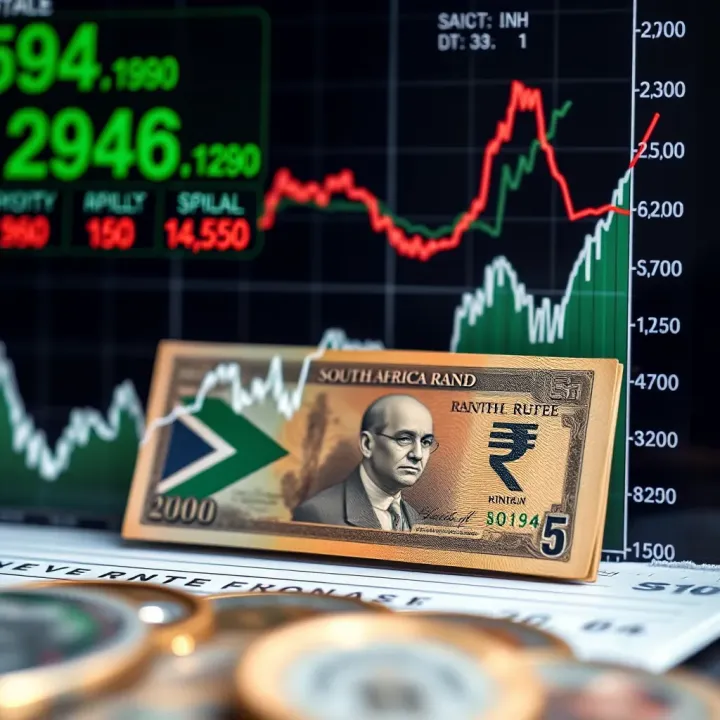
Rand to INR Exchange Rate Forecast for South African Traders
💱 Stay ahead with the Rand to INR exchange rate forecast! Learn key economic factors and trends shaping currency moves for smarter South African trading decisions.
Edited By
Emily Cartwright
The South African Rand (ZAR) to Indian Rupee (INR) exchange rate might seem like just numbers on a screen, but behind those figures lies a complex interplay of economic, political, and market forces. For traders, investors, and financial analysts, understanding these dynamics can be the difference between making a smart move and getting caught off guard.
In this article, we’ll break down the factors that influence the rand to INR exchange rate and explore the different tools and methods used to predict its movements. We’ll also look at how political developments in South Africa and India, global economic shifts, and market sentiment come together to push the exchange rate up or down.
Whether you're a business needing to manage currency risk, an investor looking for an edge, or a traveller wanting to time your currency exchange better, this guide will walk you through the essentials. Along the way, you’ll find realistic examples and practical advice tailored for those who want to grasp what drives this particular currency pair.
Getting a grip on the rand to INR rate means looking beyond numbers—understanding the larger economic story and anticipating how events might play out. That’s the key to better financial decisions tied to these currencies.
We’ll start by outlining the main forces at play and why this exchange rate matters. Then we’ll dive into prediction techniques, so you’re better equipped to read the signals in the market.
Let's get started.
Understanding the forces behind the Rand to Indian Rupee (INR) exchange rate is essential for traders, investors, and businesses dealing with cross-border transactions. These factors determine how much you get when exchanging South Africa’s currency for Indian currency, influencing profitability, investment decisions, and risk management.
The exchange rate is shaped by a mix of economic indicators, political stability, and broader global market conditions. Each of these plays a part in painting the bigger picture. For example, if inflation jumps in South Africa but remains steady in India, the Rand weakens against the INR. Meanwhile, political unrest in either country could lead to sudden swings as markets react to uncertainty.
By focusing on these factors, financial professionals get a grip on what drives currency movements, allowing for smarter forecasting and better hedging strategies. It’s not just theory – understanding these elements can directly affect the bottom line.
Inflation basically measures how fast prices rise in an economy. If South Africa's inflation is high compared to India’s, the Rand tends to lose value against the INR. This happens because inflation erodes purchasing power, making the currency less attractive to both investors and trading partners.
For instance, if South Africa experiences a 6% inflation rate while India’s is sitting around 4%, the Rand's buying power is weakening faster. Traders keep an eye on consumer price index (CPI) reports and producer price index (PPI) data to gauge this.
Practical tip: businesses importing goods from India should monitor inflation trends. If South African inflation grows faster, expect paying more in Rand when settling invoices.
Central banks set interest rates to control inflation and encourage growth. If the South African Reserve Bank raises rates while the Reserve Bank of India keeps them steady or lowers them, the Rand may attract more capital due to higher yields.
Higher interest rates mean better returns for investors holding Rand assets, boosting demand for the currency. Conversely, if Indian rates increase relative to South Africa’s, money flows towards INR, strengthening that currency.
For investors, comparing repo rates, prime lending rates, or bond yields between the two countries gives clues about short- to medium-term currency direction.
Trade balance is simply the difference between exports and imports. If South Africa exports more to India than it imports from it, there’s demand for Rand from Indian buyers as they pay for South African goods.
A trade surplus with India supports the Rand, while a deficit weakens it. Since South Africa is rich in commodities like gold and platinum, fluctuations in Indian demand for these significantly impact the balance.
Businesses dealing in these sectors should review customs stats and trade data regularly to anticipate currency pressure.
Government actions, such as monetary or fiscal policies, can sway exchange rates. For example, if South Africa introduces measures to stabilize the Rand through foreign exchange interventions or tightening monetary policy, it can shore up the currency.
Similarly, India’s government decisions on tariffs, taxation, or capital control restrictions directly affect INR’s value. An unexpected policy shift or stimulus package can trigger rapid market adjustments.
Stay updated on central bank statements and government budget announcements to anticipate policy-driven currency moves.
Political turmoil, elections, or scandals shake investor confidence. If South Africa faces political upheaval, investors might pull out capital, weakening the Rand relative to the INR.
On the flip side, stable governance in India encourages investment inflows, strengthening the Rupee. Political uncertainty acts like a wild card, often pushing exchange rates wildly in short bursts.
For risk management, build in buffers around these known volatile periods.
Strong diplomatic ties and trade agreements tend to support stable currency relations. When South Africa and India ink deals that enhance trade or investment, it boosts confidence in both currencies.
Conversely, diplomatic tensions or tariffs can create friction impacting currency flows.

Good examples include recent trade talks on automotive parts or IT services, which influence currency demand through increased or decreased cross-border transactions.
South Africa’s economy is heavily tied to commodities — gold, platinum, coal. These global prices affect how much foreign currency businesses earn when exporting.
A spike in gold prices, for example, means more USD or INR inflows to South Africa, potentially strengthening the Rand. If prices dip, the Rand usually slackens.
Anyone tracking Rand/INR should watch indices like the Bloomberg Commodity Index or the London Bullion Market Association (LBMA) gold price.
Global happenings, such as changes in US Federal Reserve policies, the China economic slowdown, or energy price shifts, impact emerging market currencies including the Rand and INR.
For instance, a strong dollar period leads to capital moving away from emerging markets, weakening both currencies. Conversely, a global growth surge can boost trade and investment flows, supporting exchange rates.
Keep tabs on reports from the International Monetary Fund (IMF) or World Bank for broader economic signals.
Foreign Direct Investment (FDI) and portfolio investments influence currency value by changing demand. Surge in Indian investments in South Africa’s mining sector or tech industry bring more Rand demand.
Similarly, South African investors increasing stakes in Indian startups or infrastructure drive the opposite.
Tracking inflow/outflow data from organizations like the South African Reserve Bank or India’s Ministry of Finance can offer insight into currency trends.
Understanding these factors isn’t just about numbers; it’s about reading the economic pulse. For traders and analysts, spotting how these indicators interplay is key to making informed decisions when dealing with Rand to INR exchange rates.
Predicting exchange rates between the South African Rand (ZAR) and the Indian Rupee (INR) is far from guesswork. Understanding the methods behind these predictions offers traders, investors, and financial advisors valuable tools to make better decisions. Whether you're hedging risks or looking to capitalize on small market movements, knowing how predictions are made is crucial.
Three main approaches dominate currency exchange rate forecasting: technical analysis, fundamental analysis, and sentiment-based analysis. Each provides a different angle on what might influence the rand versus the rupee in the short or long term. Combining these methods gives a fuller picture of possible currency swings and can help in managing the risks that come with fluctuating rates.
Chart patterns and trends give you a visual snapshot of how the exchange rate has behaved over time. Patterns like head and shoulders, double tops, or triangles might indicate potential reversals or continuation of a trend. For instance, if the rand to INR chart has been gradually making higher highs and higher lows, it signals an uptrend. Traders use such patterns to anticipate where the exchange rate might head next, providing entry or exit signals.
Use of moving averages smooth out daily price fluctuations to highlight the underlying trend. By plotting simple moving averages (SMA) or exponential moving averages (EMA), you can spot moments when the rand gains strength against the rupee or the other way around. For example, a common strategy is to look for when a short-term moving average crosses above a long-term one, often interpreted as a bullish sign.
Identifying support and resistance levels acts like finding the floor and ceiling for the exchange rate. When the rand to INR rate repeatedly bounces back from a certain level (support), it indicates buying interest there. Conversely, resistance levels show where selling pressure might cap gains. Monitoring these levels helps predict potential price barriers and avoid surprises.
Analyzing economic data releases from South Africa and India provides solid clues about currency movements. Reports on GDP growth, inflation rates, or employment numbers affect how investors view each economy’s health. For instance, a better-than-expected inflation reading in India could strengthen the INR against the rand.
Exchange rate forecasts based on fundamentals rely on calculating fair currency values by comparing economic indicators between countries. These forecasts consider factors like interest rate differentials and trade balances. When South Africa’s interest rates rise relative to India’s, it tends to draw capital inflows that support the rand against the rupee.
Role of central banks in setting monetary policy is another fundamental pillar. Actions by the South African Reserve Bank or the Reserve Bank of India, such as changing policy rates or intervening in forex markets, can sway the exchange rate significantly. Watching central bank statements and policy meetings provides clues about future currency direction.
Influence of trader sentiment is seen when collective feelings about an economy or currency drive price action beyond what fundamentals suggest. Sometimes the rand weakens simply because traders expect trouble ahead even before data confirms it.
Market speculation effects can cause sudden spikes or drops as speculators react to rumor, news, or technical triggers. These movements might not last but can create trading opportunities or risks.
News and event-driven movements impact currencies instantly. Political elections, trade negotiations, or shifts in commodity prices (like gold or oil) relevant to South Africa or India often move the rand to INR rate sharply. Keeping an ear on reliable news can help anticipate these quick changes.
Predicting the rand to INR exchange rate isn't about magic; it’s about piecing together patterns, economic clues, and human behavior to make informed bets. Combine technical charts, fundamental facts, and market moods to get the clearest picture possible.
Understanding historical trends in the Rand to INR exchange rate is a fundamental step for traders and financial analysts aiming to spot patterns and anticipate future movements. These trends reveal how past economic, political, and global events have shaped the currency pair’s value over time, offering invaluable insights into its potential behavior. By analyzing these shifts, investors can better time their trades and hedge risks effectively.
Yearly and monthly trends in the Rand to INR rate often reflect the short-term economic realities and policy decisions in South Africa and India. For example, between 2022 and 2023, the Rand showed a seasonal weakening against the Rupee during the South African winter months, partly due to reduced commodity exports. Tracking these cycles can help traders anticipate when the market might tilt in favor of one currency or the other.
Notable spikes or drops are often triggered by sudden events. A good instance occurred in mid-2020 when the Rand plunged sharply against the INR amid the first wave of the COVID-19 pandemic, reflecting market fear and capital flight. Recognizing these sharp movements helps traders avoid costly surprises and seize opportunities when volatility spikes.
Factors causing volatility include a mix of domestic issues like unexpected inflation data from South Africa or sudden interest rate changes by the Reserve Bank of India, as well as external shocks such as shifts in global oil prices or geopolitical tensions. Awareness of these drivers aids investors in anticipating or responding to fleeting market conditions.
When zooming out, decade-long trends highlight deeper structural shifts. For example, over the past ten years, there’s been a gradual appreciation tendency of the INR against the Rand, largely influenced by India’s steady GDP growth and diversification away from commodity dependence which affects South Africa. Understanding these slow-burn trends helps investors calibrate their strategies beyond day-to-day market noise.
The correlation with major economic events is another crucial angle. The 2015 commodity price crash, for instance, significantly weakened the Rand while the Rupee remained comparatively stable. Similarly, India's major tax reforms, like GST implementation, contributed to Rupee strength. Tracking such correlations provides context that goes beyond headline data.
Lastly, shifts in trade relations impact currency dynamics. Rising trade between South Africa and India in sectors such as mining machinery and pharmaceuticals has supported more balanced exchange rates over recent years. Changes in tariffs or new bilateral agreements will continue to play a role, and closely monitoring these developments can give traders a leg up.
Keeping an eye on historical trends offers a roadmap through the unpredictable landscape of Rand to INR fluctuations. It’s about learning from the past to make smarter bets for tomorrow.
By grounding predictions in historical realities, traders, investors, and analysts can work with more confidence and precision when navigating the Rand to INR market.
Understanding practical aspects of managing the Rand to INR exchange rate is essential for both businesses and individuals. Fluctuations in this currency pair can directly affect profits, costs, and personal finances. For example, an importer in South Africa buying goods from India must stay vigilant about exchange rates to avoid unexpected expenses. Similarly, individuals sending money back to family or travelling need smart strategies to stretch their Rand.
By focusing on practical measures—like hedging and choosing the right time to exchange money—stakeholders can reduce the risk of losses due to sudden swings. These considerations help turn complex financial moves into manageable decisions, cutting uncertainty and boosting confidence.
Forward contracts and options offer straightforward ways to lock in exchange rates ahead of time. A business expecting to pay Indian suppliers in six months can fix the Rand to INR rate today with a forward contract, avoiding surprises if the Rand weakens. Options provide more flexibility, allowing you to benefit if rates move in your favor while limiting downsides. These tools aren't just for big companies; even smaller traders can use them through their banks or brokers.
Currency swaps are another useful tactic, especially for larger firms dealing with sustained exposure between South African Rands and Indian Rupees. In a swap agreement, two parties exchange principal and interest payments in different currencies. For instance, a South African business might swap Rand-denominated debt for INR debt, aligning expenses with income streams in India. This method can stabilize cash flow and guard against fluctuating rates over longer periods.
Risk management best practices round out these strategies. Diversifying currency exposure reduces dependency on one market. Regular monitoring of economic and political events in South Africa and India keeps decision-makers informed and ready to adjust. Establishing clear policies and limits on currency risk, and using professional advice when needed, can save businesses from costly mistakes. Simple steps like maintaining a multi-currency bank account or using financial software to track conversions make managing volatility less daunting.
Knowing the best times to exchange currency can save travellers a neat chunk of cash. Exchange rates often dip during particular seasons due to tourist flows or economic announcements. For example, rates may be more favorable just before major festival seasons in India when demand shifts. Keeping an eye on trends and avoiding airport kiosks, which often charge hefty premiums, helps secure better deals.
Avoiding high fees is another key aspect. Many traditional currency exchange services or banks hide costs through poor rates or flat fees that add up. Using comparison tools and choosing providers who offer transparent fees and mid-market rates is crucial. Some South African travellers find that prepaid forex cards or local money changers can be cost-effective alternatives if researched properly.
Using digital currency exchange platforms has become increasingly popular and convenient. Platforms like Wise or CurrencyFair often provide closer-to-market exchange rates with lower fees than banks. They allow users to lock rates in advance and manage transfers online safely. For anyone planning a trip to India, these apps streamline the process of converting Rand to INR, making it quicker and less stressful.
For both businesses and individuals, a well-thought-out approach to currency management reduces risk and saves money. Whether locking in rates with contracts or timing exchanges as a traveller, practical planning pays off.
Understanding the future outlook of the Rand to INR exchange rate is fundamental for anyone dealing with this currency pair. Whether you're a trader looking to time the market, an investor assessing risk, or a business planning cross-border transactions, predicting where the exchange rate might head helps in making informed decisions. The currency market doesn’t move in a vacuum — it reflects economic realities, policies, and global shifts. Keeping an eye on economic indicators, geopolitical events, and market psychology can provide clues about future movements.
The growth trajectories of South Africa and India are prime drivers behind their currencies. When South Africa’s GDP expands due to sectors like mining or agriculture flourishing, the Rand often strengthens as investor confidence builds. Similarly, India’s booming tech and manufacturing sectors can push the Rupee higher. For instance, if India reports a 7% annual GDP growth while South Africa lags at 2%, the Rupee might gain ground against the Rand. Traders and businesses should watch quarterly GDP releases and sectoral performance to anticipate shifts.
Central banks steer currency values through interest rates and liquidity control. The South African Reserve Bank (SARB) and the Reserve Bank of India (RBI) influence their currencies significantly. If SARB signals tightening policies to curb inflation, yielding higher interest rates, the Rand might attract more foreign capital, boosting its value. Conversely, if RBI eases rates to stimulate growth, the Rupee could weaken. Paying attention to central bank meetings, rate announcements, and policy statements offers actionable clues for exchange rate trends.
Trade agreements between South Africa and India can reshape currency dynamics. For example, a new free trade pact or tariff reductions could encourage more bilateral trade, increasing demand for each other’s currency. This can strengthen the Rand versus the Rupee or vice versa depending on trade volume changes. Businesses involved in imports or exports should track trade negotiations, as favorable deals often mean smoother currency exchange conditions and reduced volatility.
Political stability or unrest deeply affects currency confidence. Unexpected political developments, such as elections, policy shifts, or conflicts, can cause sudden Rand or Rupee fluctuations. For instance, a change in South Africa’s mining regulations or India’s foreign investment policies may swiftly impact currency values. Stakeholders must remain aware of political calendars and diplomatic relations to manage risk effectively.
South Africa’s economy hinges heavily on commodities like gold and platinum. Price swings in these markets can ripple through the Rand's strength. If gold prices rise sharply, South Africa's export earnings improve, typically bolstering the Rand. India, on the other hand, is a large importer of oil, so rising oil costs strain the Rupee. Tracking commodity prices offers a practical angle on where the Rand to INR exchange rate might move next.
Worldwide economic instability—such as recessions, pandemics, or financial crises—often causes capital flight to safer assets like the US dollar, indirectly impacting Rand and Rupee values. During uncertainty, emerging market currencies can weaken due to perceived risk. Traders and investors should factor in global conditions alongside local fundamentals to get a complete picture. Monitoring institutions like the IMF or World Bank can help anticipate global shocks that affect exchange rates.
Keeping a finger on these economic indicators and risk factors isn't just academic—it's practical. Chaotic swings can be tamed with preparation, and opportunities seized through insight. Understanding the future outlook of the Rand to INR exchange rate equips you with a sharper edge in what can otherwise feel like a guessing game.
💱 Stay ahead with the Rand to INR exchange rate forecast! Learn key economic factors and trends shaping currency moves for smarter South African trading decisions.

📉 Explore South Africa's Rand vs. US Dollar trends, economic factors, geopolitical impacts, and market signals shaping currency outlooks.

📊 Explore this week's rand to dollar rate trends, key factors shaping the exchange, impacts on SA economy, plus expert views and forecasts. 💼💵

Explore the Pound to Rand forecast 📉💷💰 with insights on past trends, key economic factors, and expert tips for smart decisions in SA currency moves.
Based on 12 reviews