

Understanding Derivative Trading in Kenya
📊 Explore how derivative trading works in Kenya’s markets, the types involved, regulation, risks, and practical investor tips to navigate this complex area wisely.
Edited By
Thomas Fletcher
In financial markets, uncertainty is part and parcel of any investment or business decision. The expect option is a financial tool that helps traders, investors, and firms navigate this uncertainty. Unlike traditional options, which give the buyer the right to buy or sell an asset at a fixed price within a set timeframe, expect options focus on managing expected future payoffs based on probabilistic outcomes.
An expect option is grounded in the concept of expected value — essentially the average payoff, weighing all possible outcomes by their likelihood. This differs from classic options tied directly to asset prices or indices. Instead, expect options often relate to contingent events where the payoff depends on the expectation rather than a fixed underlying market price.

For example, a Kenyan agribusiness might use an expect option to manage risk around uncertain weather patterns affecting crop yields during the long rains. Instead of fixing prices now, they agree on a contract that pays out based on the expected rainfall volume, helping them hedge against drought or excess rain without locking into fixed commodity prices that may not reflect their eventual yield.
Expect options can provide flexibility in uncertain environments where outcomes are better represented by probabilities rather than fixed prices.
These instruments have practical uses beyond agriculture. Investors weighing opportunities with unpredictable returns, such as renewable energy projects or early-stage startups, can use expect options to balance potential gains against risks. Financial advisors in Kenya often recommend these options when standard derivatives don't fit the decision-making context.
Valuing an expect option depends on understanding key factors like the probability distribution of outcomes, risk preferences, and time horizons. Bayesian methods and Monte Carlo simulations are often used to estimate expected payoffs in real-world scenarios.
That said, expect options carry risks: incorrect probability estimates or sudden market shifts can lead to misleading expectations and losses. Kenyan traders and analysts must combine rigorous data analysis with local market insights.
In summary, expect options are valuable tools for managing complex uncertainties. They offer a way to align financial contracts with expected outcomes, making them especially relevant in emerging markets like Kenya’s where unpredictability is common.
This article will break down how expect options work, their valuation methods, practical examples from Kenyan markets, and tips for prudent use.
Understanding the expect option starts by recognising its role as a flexible tool in financial contracts. Unlike traditional options, an expect option gives the holder the right—but not the obligation—to make decisions at various points in the future, depending on how circumstances unfold. This flexibility makes it especially valuable in managing uncertainty and planning strategically.
An expect option is essentially a decision-right embedded within a contract or investment that gives its holder multiple chances to act based on changing conditions. For example, a farmer might have an expect option to plant a different crop mid-season if rainfall patterns change. Here, the option’s value lies in the ability to adapt, not just in a fixed payoff.
In financial terms, it means the contract holders can defer, expand, reduce, or abandon certain actions as new information becomes available. This contrasts with standard call or put options which usually have a single exercise date and fixed terms.
This option helps businesses and investors make decisions step-by-step rather than committing upfront. For instance, a real estate developer in Nairobi may hold an expect option to delay the start of construction until market demand clarifies. By doing so, they avoid losses from premature investment and can seize opportunities when conditions improve.
The expect option acts like a “wait and see” strategy, allowing firms to manage cash flows more efficiently and reduce the risk of costly mistakes. This is vital in volatile environments such as commodity prices or fluctuating interest rates.
Expect options provide a buffer against unpredictable factors. Take the case of a tea exporter relying on unpredictable weather conditions; the option lets them adjust buying quantities or shipment dates without penalty. This mitigates risks tied to price swings or poor harvests.
By allowing flexibility, expect options reduce exposure to sudden shocks. Kenyan investors often face such uncertainties due to seasonal effects and currency volatility. Holding such options means avoiding rushed decisions that might lead to losses.
Besides managing risks, expect options unlock opportunities that might otherwise be missed. For example, a tech startup might use an expect option to expand operations only after testing market reception, conserving funds until success is more certain.
Expect options encourage strategic thinking. They align investment plans with evolving realities, ensuring resources are deployed where they bring the best returns. This approach has practical value in Kenya’s fast-changing markets, such as the renewable energy sector or retail growth across urban and rural counties.
The key takeaway: expect options empower decision-makers to keep options open and act when conditions are right, blending caution with readiness for opportunity.
In summary, defining the expect option clarifies its unique ability to provide flexibility, manage uncertainty, and support well-timed decisions. This understanding sets the foundation for utilising expect options effectively in diverse financial scenarios.
Understanding how expect options differ from traditional financial options reveals why they have gained attention among investors and businesses, particularly in uncertain markets like Kenya's. Unlike standard call and put options that focus strictly on buying or selling an asset at a set price, expect options offer more flexibility and strategic advantages that better accommodate complex decision-making scenarios.
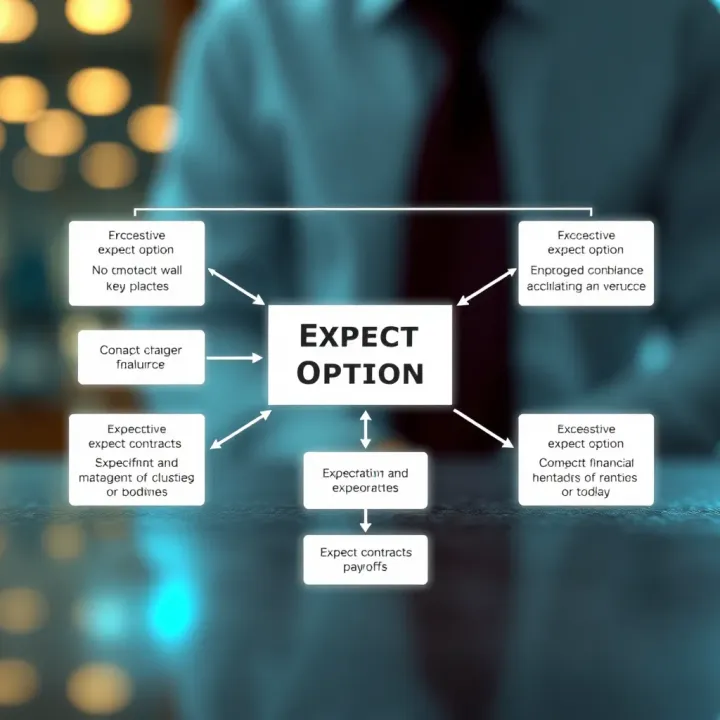
Expect options and traditional options such as call and put options share a common foundation: both grant the holder the right, but not the obligation, to make a financial decision at some point. This means the buyer can choose to exercise their option depending on market conditions or business prospects, making both instruments tools for managing risk and capitalising on future opportunities. For instance, a call option gives the right to buy a stock at a fixed price before expiry, similar to how an expect option allows a choice based on evolving circumstances.
The most striking difference lies in the nature of the payoffs. Traditional options have well-defined payoffs — either profit from movements in the asset's price above or below the strike price or lose the premium paid. Expect options, however, incorporate a broader range of future scenarios, often involving multiple stages or decisions. Instead of a simple in-or-out payoff, expect options might allow an investor to delay, expand, or abandon projects depending on how the environment unfolds. For example, a company in Nairobi might hold an expect option to decide later whether to extend a factory, helping it respond flexibly to fluctuating demand and costs, unlike a standard call option limited to asset price gains.
Expect options give holders the ability to decide on the timing and extent of exercising the option. Unlike traditional options with fixed expiry dates, expect options often allow decision-making at multiple points or over an extended timeline. This flexible timing reflects real-life business conditions where managers may wait for clearer signals about the market or regulatory environment before committing resources. For instance, an agribusiness might use an expect option to wait until the start of the rainy season before investing in inputs, balancing risk against potential reward.
The strategic value of expect options goes beyond immediate financial returns. They serve as a tool for dynamic planning, where businesses can adapt their strategies as new information emerges. This is particularly useful in Kenyan industries affected by unpredictable factors such as political changes, infrastructure development, or weather patterns. By embedding expect options into contracts or investment plans, companies can build in contingencies, making their approach more resilient. In effect, expect options act like a form of insurance, but with the added benefit of capturing upside potential rather than just protecting against losses.
Expect options add a layer of strategic insight that traditional options often lack, enabling businesses to navigate uncertainty by postponing, expanding or cutting losses in real time.
In short, while traditional call and put options provide straightforward mechanisms to manage price risks, expect options offer a broader framework that aligns with complex decision-making needs seen in Kenya's unique economic context. Investors and businesses considering these tools should weigh their flexibility against the additional complexity and ensure clear valuation methods are in place.
Expect options have found practical uses in Kenya, helping businesses and investors tackle uncertainty and make better financial decisions. Their flexibility suits the local economic environment, where markets can be volatile and project outcomes unpredictable. Let’s explore how Kenyan businesses apply expect options in investment decisions, project planning, agriculture, and commodity trading.
Timing is everything when making business investments. Using expect options, Kenyan companies can delay or stage their investments until conditions improve or more information is available. For instance, a Nairobi-based tech startup might hold an expect option on expanding to other counties. By waiting for clearer data on demand or regulatory changes, the startup reduces the risk of committing early and suffering losses.
This approach also helps local manufacturers decide when to buy costly equipment or enter new markets. Rather than rushing in, they preserve the option to invest later once economic signals are favourable. This flexibility adds value by allowing firms to adapt their strategies without losing out on potential opportunities.
Resource allocation is often tricky when future situations are unclear. Expect options enable Kenyan businesses to allocate capital more wisely by keeping investment options open. For example, a construction firm planning a large housing project in Mombasa may face uncertain material costs or approval processes.
With an expect option, the firm can reserve the right to proceed when conditions stabilise, rather than committing resources upfront. This reduces wasted expenditure if unexpected delays or cost hikes occur. In this way, expect options allow better risk management and financial planning under uncertainty.
Agriculture in Kenya is highly dependent on seasonal patterns, and farmers face unpredictable weather risks. Expect options help farmers and traders manage these by providing flexibility in decision points. A tea producer in Kericho, for example, can use expect options to delay selling harvested tea leaves until clearer market demand or prices emerge after the short rains season.
This strategic delay can prevent forced sales at low prices during a glut. Expect options allow agricultural businesses to navigate seasonal fluctuations by timing their actions for maximum benefit.
Commodity prices in Kenyan markets such as maize, coffee, and tea can swing widely. Expect options give traders the right, but not the obligation, to lock in prices or wait for better offers. For instance, a maize trader in Eldoret may hold an expect option to buy maize stocks later during market volatility.
This approach safeguards profits by avoiding rushed purchases when prices spike unexpectedly. It also opens opportunities to capitalise on price dips. Expect options thus provide a valuable tool for managing price risk, especially in markets influenced by both local harvest cycles and international demand.
Expect options serve as a practical tool to manage uncertainty, optimise timing, and reduce risk across key sectors of Kenyan markets.
By incorporating expect options into their financial strategies, Kenyan businesses and investors can better face market unpredictability and plan for the future with confidence.
Valuing expect options accurately is crucial for investors and businesses relying on these contracts to manage future uncertainties. These options often involve multiple variables, and understanding these helps in making informed decisions that balance risks and potential rewards. Kenyan traders, investors, and financial analysts must consider specific factors such as market conditions, volatility, and time horizons to estimate the option's worth appropriately.
Market conditions influence the expect option’s value directly. These include prevailing interest rates, economic growth outlook, and specific industry trends affecting the underlying asset. For instance, a construction firm considering an expect option on a land parcel in Nairobi will assess current demand for real estate, interest rates by the Central Bank of Kenya (CBK), and government infrastructure plans before valuing the option. If the market signals rapid growth and increased housing demand, the expect option’s value is higher since the potential for future profit increases.
Such market factors can shift quickly, especially around election years or during changes in economic policy. Hence, remaining updated on macroeconomic indicators and sector-specific news is vital to prevent overvaluing or undervaluing options.
Volatility and time horizons also play an important role. Volatility refers to how much the price of the underlying asset is expected to fluctuate. Higher volatility means greater uncertainty but also a higher likelihood of the option becoming profitable. For example, agriculture commodities in Kenya such as maize or tea experience seasonal price swings that raise volatility. An investor holding an expect option on tea futures needs to factor in this seasonality and unpredictable weather patterns impacting yields.
Time horizon matters because an expect option typically gains value the longer the investor can wait before exercising it. Longer time frames allow more opportunities for favourable changes in market conditions, but also increase exposure to risks such as political instability or currency depreciation. Hence, investors must balance patience against risk.
Discounted cash flow (DCF) techniques are widely used to value expect options. This involves estimating the future cash flows the option might generate and then discounting them back to their present value using an appropriate discount rate, often reflecting the local risk-free rate plus a premium for risk. For instance, a solar energy project in Kisumu with an expect option needs to forecast expected energy sales over the next five years; these are then discounted using current Kenyan bond yields to arrive at a present value estimate.
This approach captures the time value of money, which is especially relevant in Kenya’s dynamic financial environment where interest rates and inflation can vary significantly.
Scenario analysis and modelling provides a more flexible way of valuation by considering multiple possible outcomes and their probabilities. Instead of relying on a single forecast, practitioners construct different scenarios such as best case, worst case, and most likely case. For example, a farmer with expect options on maize futures may model scenarios including favourable rainy seasons, droughts, or pest outbreaks, each impacting expected returns.
This method allows for better risk management by highlighting how sensitive the option’s value is to external shocks peculiar to the Kenyan market.
Accurate valuation of expect options equips investors and businesses with the clarity needed to navigate complex financial decisions, especially when dealing with Kenya’s fast-changing economic landscape.
Understanding these factors and applying robust valuation methods ensures that financial decisions based on expect options are grounded in reality and poised to deliver meaningful benefits.
Using expect options wisely means recognising the risks involved and making decisions based on thorough analysis. These financial instruments help manage uncertainty by providing flexibility, but they also come with risks that traders, investors, and advisors must understand. Grasping these risks leads to better planning and helps in avoiding costly mistakes.
Market conditions can change suddenly due to political events, economic shifts, or external shocks like changes in commodity prices. For example, a farmer planning to invest in a new maize storage facility using expect options must consider fluctuating maize prices influenced by seasonal rains and government policies. If the market turns unfavourable, the expected payoffs might diminish, making timely reassessment critical.
Expect options provide a chance to delay decisions, but relying too heavily on market predictions without ready plans can backfire. Investors should stay alert to shifts in the Nairobi Securities Exchange (NSE) trends or global market changes affecting Kenyan exports such as tea and coffee.
In business projects, unexpected costs and delays can erode the expected value from an expect option. For instance, a construction firm initiating a real estate development might face rising material costs or hold-ups in securing permits. These factors increase expenses and push returns further into the future, reducing the option's attractiveness.
Decision-makers need to factor in these potential setbacks early on. Oversight in budgeting or scheduling not only risks financial loss but also wastes the opportunity that the expect option was supposed to protect.
Careful examination before engaging an expect option is essential. This involves analysing market data, assessing the project's feasibility, and simulating different scenarios. For example, an investor considering expect options in the Kenyan agriculture sector should evaluate rainfall patterns, crop cycles, and logistics challenges.
Due diligence helps reveal hidden risks and guides realistic expectations. It also uncovers if alternative investments might yield better returns or less risk, ensuring rational use of resources.
Working with professionals who specialise in financial contracts and market analysis improves decision quality. Experts can provide insights on valuation methods and help interpret complex option terms.
In Kenya, firms often consult financial analysts or brokers from institutions like the Nairobi Securities Exchange or licensed investment advisors. These experts bring experience that helps navigate uncertainties and tailor strategies suited to local market dynamics.
Wise management of expect options includes identifying risks clearly and seeking expert guidance to convert opportunities into solid financial outcomes.
In summary, managing risks in expect options calls for vigilant monitoring of market conditions and project execution risks. Combining thorough due diligence with advice from knowledgeable financial experts helps investors in Kenya make informed choices and protect their investments effectively.
📊 Explore how derivative trading works in Kenya’s markets, the types involved, regulation, risks, and practical investor tips to navigate this complex area wisely.

🤖 Discover how forex trading bots operate, their pros and cons, plus tips for South African traders choosing the best automated tools for smarter forex trades.
💹 Understand derivative withdrawal times in SA trading—learn key factors, manage delays, and avoid pitfalls to handle your investments smoothly and confidently.

📊 Explore synthetic indices: what they are, how they work, key types, risks, benefits & smart trading tips tailored for South African investors.
Based on 6 reviews