
Trading Cryptocurrency: A Practical Guide for Kenyans
🔍 Discover how Kenyans can trade cryptocurrency confidently using practical tips on safe platforms, smart strategies, risk control, and understanding tax rules in Kenya.
Edited By
James Whitmore
Margin in forex trading is a fundamental concept for anyone wanting to engage in currency markets, especially Kenyan traders navigating the forex space. Put simply, margin is the amount of money you need to set aside as a security deposit to open and maintain a trade position. Unlike a full purchase price, margin lets you control larger sums with a smaller capital outlay.
For example, if you want to trade a standard lot of 100,000 US dollars against the Kenyan shilling, you won’t need the full amount upfront. With a margin requirement of 1%, you'd need only KS00,000 as margin rather than KS0 million. This means you can enter bigger trades even when your capital is limited.
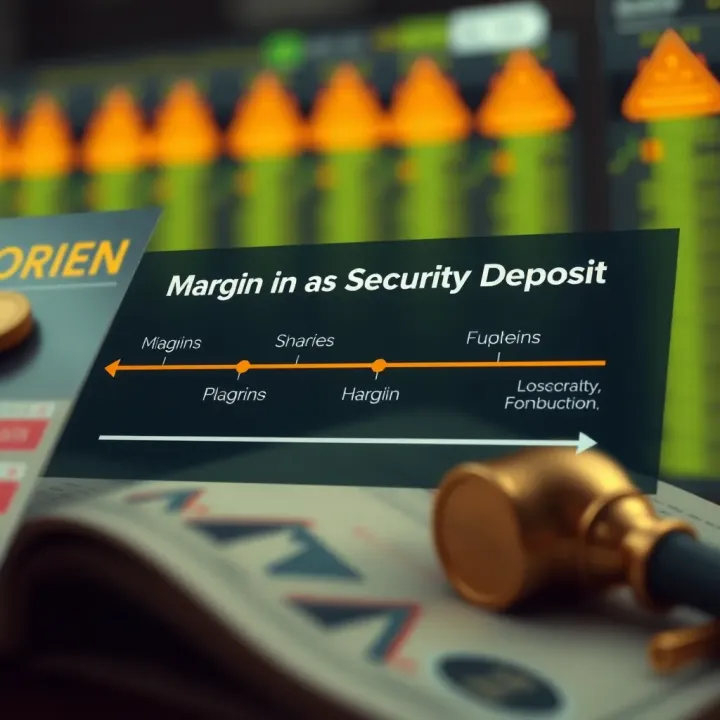
Margin acts like a security bond: it’s not a cost, but your stake on the market, ensuring you can cover possible losses.
Using margin magnifies both potential gains and losses. While it boosts your buying power, it also increases risk exposure. If the market moves against your position, losses can exceed your initial margin, leading to margin calls or automatic trade closures by your broker.
Understanding margin involves recognising a few key terms:
Leverage: The ratio showing how much you can control relative to your margin — e.g., 1:100 means you control 100 times your margin.
Margin Call: A notification from your broker asking you to add funds when your equity falls below required margin.
Free Margin: The available funds in your account not currently tied up in trades, which you can use to open new positions.
Kenyan traders must approach margin thoughtfully. Forex brokers in Kenya offer varying margin and leverage levels, sometimes as high as 1:500. While tempting, such high leverage can quickly wipe out savings, especially during volatile market periods like around major economic announcements or central bank decisions by the Central Bank of Kenya.
To trade wisely, always check your broker’s margin requirements and manage your trade sizes accordingly. Use stop-loss orders to limit losses and never risk more than you can afford to lose. Familiarity with margin rules helps in balancing the opportunity to grow profits and managing risk effectively.
In short, margin trading opens doors for Kenyan investors to participate in forex markets with limited capital but demands disciplined risk control to avoid severe losses.
Margin in forex trading acts as a security deposit that allows you to open and maintain positions in the market. It's not a fee, but rather a portion of your funds set aside to cover potential losses. For example, if you're trading a standard lot worth $100,000, your broker might require you to have a margin of 1%, meaning you need KSh 138,000 (assuming a rate of KSh 138 to $1) as collateral. This deposit ensures you can maintain your position without needing the full amount upfront.
Margin serves as a safety net for both the trader and the broker. When you enter a trade, the margin holds part of your funds to cover any potential losses. This deposit does not transfer ownership or buy the currency itself but guarantees you have enough capital to sustain your trading. For Kenyan traders, this means you don't have to cough out large amounts at once but still get to control sizeable currency positions.
Margin and leverage are closely linked but mean different things. While margin is the money set aside to open a position, leverage is the factor by which your trading power increases. For instance, if your leverage is 1:100, you can open a position 100 times larger than your margin. Say you have KSh 10,000 as margin; with 1:100 leverage, you control KSh 1,000,000 in the forex market. This can magnify profits but also losses, so it's important to understand both clearly.
By allowing you to use a fraction of your capital as margin, you can control much larger trades than you'd afford outright. Think of it as using a deposit to lease a bigger asset. This capacity suits Kenyan traders who may want exposure to major pairs like EUR/USD or GBP/USD without investing huge sums. However, this power must be used carefully, as bigger trades mean bigger risks.
This is the minimum amount you must have in your account to open a new trade. For example, if a broker requires an initial margin of 2% to buy 1 standard lot, you'll need KSh 276,000 to initiate that position based on today's exchange rates. Without meeting this, the platform won't allow you to enter the trade.
Once your trade is open, maintenance margin is the minimum equity your account must hold to keep your positions. If your account equity falls below this due to losses, your broker may issue a margin call. Maintenance margin is usually lower than the initial margin and helps ensure you have enough buffer in your account.
A margin call happens when your available margin falls below the broker's required maintenance margin. At this point, you must either top up your account or close some positions to reduce exposure. In Kenya, this is a critical risk for traders who don't monitor their accounts closely, as ignoring margin calls can lead to forced closures and significant losses.
Understanding these margin concepts helps Kenyan traders manage their forex activities confidently. It clarifies the funds needed, the risks involved, and the broker's safeguards, making the trading experience more transparent and manageable.
This knowledge lays the foundation for prudent trading, balancing opportunities for profit with careful risk management.
Understanding how margin operates in forex trading is key for Kenyan traders who want to manage their investments efficiently. Margin allows traders to open larger trade positions by putting up a fraction of the total trade value. This makes it possible to participate actively in the forex market even with limited capital.
Leverage is the multiplier that shows how much larger a position you can control with your margin. For instance, leverage of 1:100 means you can control KSh 100,000 with just KSh 1,000 of your own funds set aside as margin. This ratio varies depending on the broker and regulations, but it directly influences how much margin you need to maintain a position. A higher leverage ratio reduces the margin required but increases the risk exposure on your funds.
Suppose you want to buy 1 standard lot of EUR/USD, where 1 standard lot equals 100,000 units of the base currency. If the broker requires a margin of 1%, you need to have 1% of 100,000 euros as margin. Converting that to Kenyan shillings at an exchange rate of 1 EUR = KS30, the margin needed would be 1,000 euros, which equals KS30,000. This means you must have at least KS30,000 in your account to open this position.
Different currency pairs can affect required margin because of their varying exchange rates and volatility. For example, trading USD/JPY where the yen is weaker against the US dollar means the margin requirement in Kenyan shillings will adjust accordingly. Also, more volatile pairs often require higher margin as protection for the broker, since price swings can be abruptly larger.
The size of your trade position, often measured in lots, directly affects the margin you must keep. Larger lot sizes require more margin. For example, 1 micro lot is 1,000 units of currency and might require only a fraction of the margin compared to a standard lot. Choosing the right lot size aligned with your available margin helps prevent overexposure.
If your account has limited funds, lowering your position size is a practical way to manage margin. For instance, instead of trading 2 standard lots, downsizing to 0.5 lots reduces the margin needed and gives you more room to absorb losses before a margin call. This approach allows more flexibility, especially during times of high market volatility.
Forex brokers in Kenya often offer various account types—like standard, mini, or micro accounts—each with different margin requirements and minimum deposit levels. Micro accounts are ideal for beginners needing lower margin due to smaller minimum trades, while experienced traders might prefer standard accounts to access better spreads and leverage. Selecting the right account type based on your capital and risk appetite is vital for effective margin use.
Margin works as the backbone of forex trading, enabling you to control significant value with a small upfront capital. However, managing this carefully ensures your trading doesn't expose your capital to unnecessary risks.
By grasping these margin principles, you can make smarter choices about your trade sizes, leverage, and account types, all while keeping a close eye on your trading margin requirements in Kenyan shillings.
Trading on margin amplifies both potential gains and losses, which makes understanding its risks vital for any trader in Kenya’s forex market. Margin trading isn’t just about boosting your buying power; it comes with the responsibility to manage possible downsides carefully. If you don’t monitor your margin levels, you risk facing margin calls, forced closures, and significant impacts on your account balance. Being aware of these consequences helps you safeguard your capital and trade responsibly.
A margin call happens when the funds in your trading account drop below the minimum required to maintain your open positions. For instance, if sudden Shilling depreciation causes losses that exhaust your margin buffer, your broker will notify you to add more funds. This warning is crucial—it gives you a chance to top up your account and avoid liquidation. Ignoring margin calls can lead to faster losses, so prompt action matters.
If you don’t add more funds after a margin call, brokers may force close some or all of your trades to prevent your account from going into negative balance. This means you lose control over when or how your positions close, possibly locking in losses at a bad time. In Kenya’s volatile forex environment, this can happen quickly, especially during unexpected market moves linked to events like currency shocks or economic announcements.
When forced closures occur, losses are realised immediately, reducing your account balance. Unlike regular trading where you choose when to exit, forced closures might leave you with less capital than expected, affecting your ability to open new positions or meet withdrawal goals. It’s not uncommon for new traders in Kenya, unfamiliar with margin risks, to see their accounts drained faster than anticipated due to these closures.
Leverage lets you control bigger trades with less capital, but too much of it magnifies risks. For example, using 1:500 leverage means just a 0.2% price move against you can wipe out your margin. This exposes your portfolio to quick, steep losses. Kenyan traders drawn by high leverage offers should remember that it doesn't guarantee profit; rather, it increases vulnerability to market swings.
Consider a Kenyan trader who opened a position worth KSh 1,000,000 using KSh 2,000 margin with 1:500 leverage. A 0.5% adverse price move reduces the position by KSh 5,000, which is more than twice the margin. This loss triggers a margin call or forced closure, leaving the trader with zero or negative balance. Stories like these are common among forex novices who chase big profits without protecting their margin.
Lowering your leverage is a key strategy when margin risks feel too high. If you notice frequent margin calls or your account balance is shrinking fast, it’s a sign to reduce leverage. Using a smaller leverage level, such as 1:10 or 1:20, gives you more breathing room and helps avoid premature liquidations. Kenyan forex brokers, regulated by CMA Kenya, often offer guidance on suitable leverage levels for different experience stages.
Managing margin risks isn’t optional—it’s a must. Keeping a close eye on margin levels and adjusting leverage protects your capital and lets you trade with confidence.
By understanding these risks and acting on them, Kenyan traders can improve their chances of building steady profits rather than facing sudden, painful losses tied to margin mismanagement.
Trading on margin can boost your buying power, but without careful handling, it can wipe out your capital fast. Kenyan traders must apply best practices to keep risks manageable and protect their wallets. This means using tools like stop-loss orders, choosing leverage that suits your skill level, and practising with demo accounts before risking real money.
Stop-loss orders act like guardrails. They automatically close your trade if the price moves against you by a certain amount, limiting losses. For instance, if you open a position on the USD/KES pair and set a stop-loss at 1% below your entry price, your losses won't spiral beyond that point even if market swings are wild. This is especially crucial in the Kenyan context where currency volatility can quickly eat into your account balance.
Take-profit orders work the opposite way—locking in gains once a target price is reached. By setting these levels, you prevent emotional trading decisions like holding onto a winning trade for too long and losing profits. Together, stop-loss and take-profit help manage your exposure so your margin stays intact.
A margin call happens when your account equity falls below the broker’s requirement, forcing you to deposit more funds or face position closure. Using stop-loss orders reduces this risk by limiting how far trades can move against you. For example, if your margin requirement is KSh 10,000 but you lose more than this due to no stop-loss, your broker could close positions automatically, leaving you with less capital.
By actively managing stop-losses and avoiding over-leveraging, you keep enough free margin to absorb market fluctuations. This practical approach can save you from unexpected margin calls on volatile days when the Kenyan shilling shifts rapidly.
Beginners should approach leverage cautiously, starting with low levels such as 1:10 or less. This limits potential losses while allowing for real market exposure. For example, starting a trade with KSh 20,000 and using 1:10 leverage lets you control a trade worth KSh 200,000 without risking more than your capital.
Experienced traders, who better understand market behaviour and risk management, may use higher leverage like 1:50 or 1:100. However, they also adjust position sizes and use advanced protection tools, so they don’t expose themselves to large losses. Even skilled traders in Kenya need to stay alert as market conditions can change quickly.
Local brokers regulated by the Capital Markets Authority (CMA) set maximum leverage limits to protect traders. Most offer up to 1:50 for retail clients, reflecting a balance between opportunity and safety. This means for every KSh 1,000 you have, you can control up to KSh 50,000 in trades.
Brokers also require maintaining a margin level above a certain threshold, ensuring traders can cover their positions. Knowing these rules helps Kenyan traders pick brokers that match their risk preferences and avoid surprises from forced liquidations.
Demo accounts let you trade forex with virtual funds, replicating real market conditions without risking shillings. Here, you can experiment with margin use and experience margin calls in a safe setting. For example, you might enter a large position and watch how a falling currency pair brings your margin level down. Seeing the margin call process firsthand teaches you when to act before losing real money.
Position sizing is a key skill for responsible margin use. It means deciding how big your trades should be relative to your account size and risk appetite. Demo accounts provide a platform to refine this by testing different sizes, leverage levels, and stop-loss setups.
By practising without pressure, you understand how a bigger position can magnify gains—and losses. Kenyan traders can thus build good habits that prevent overexposing their accounts when moving to live trading.
Using margin safely isn’t just about knowing the numbers; it’s about applying risk controls that protect your hard-earned capital, especially in markets as volatile as forex.
Adopting these best practices solidifies your footing in the forex market and keeps you trading longer with fewer surprises.
Margin is a fundamental part of forex trading everywhere, but in Kenya, understanding how it works can make a big difference for traders managing their capital and risk. Kenyan traders often use margin to control larger positions with smaller funds, given that forex allows access to international currency markets without needing huge upfront money. This makes it especially vital to grasp how local conditions—like broker policies and the Kenyan shilling’s volatility—affect margin requirements and overall trading success.
Kenya hosts several brokers popular among retail and professional forex traders, such as EGM Securities, HotForex, and Exness. These brokers offer varying margin requirements influenced by both global standards and local regulatory frameworks. For example, a margin requirement might be 1% for major currency pairs, meaning you need KSh 1,000 to control a KSh 100,000 position. However, less liquid pairs or exotic currencies often require higher margins due to greater risk.
Mother balance: Many brokers operating in Kenya provide accounts tailored for different trader levels. Some offer demo accounts to practice margin trading safely before risking actual capital. This mix enhances trader confidence and helps manage margin use more prudently.
Regarding regulations, the Capital Markets Authority (CMA) of Kenya oversees the conduct of forex brokers to protect investors. Brokers must comply with rules on leverage caps and margin disclosure. Currently, while there is no strict CMA limit on leverage, responsible brokers typically offer leverage up to 1:100 or less to Kenyan clients to prevent excessive risk.
The Kenyan shilling (KES) can experience fluctuations due to factors like inflation, trade deficits, or political events. When you trade forex with margin, these currency movements impact the real cost of your positions. For instance, if you open a position denominated in USD while the shilling weakens sharply, your margin call risk increases even if your open trade hasn’t moved much.
Managing currency risk means Kenyan traders need to monitor both the forex pair they trade and the shilling’s exchange rate closely. Hedging strategies or choosing pairs less affected by local currency swings can reduce unexpected margin shortfalls.
In practical terms, here are some tips for Kenyan traders to handle margin amid shilling volatility:
Use leverage conservatively, especially during economic or political uncertainty.
Keep some KSh liquidity available in your trading account to cover sudden margin calls.
Consider trading major pairs like EUR/USD or USD/JPY that tend to have lower spreads and clearer margin rules.
Regularly review broker margin policies since changes can happen with shifts in market or regulatory conditions.
Understanding local broker specifications and how the Kenyan shilling moves against other currencies helps you use margin more safely and avoid unnecessary losses.
By staying informed about Kenya's trading environment and managing margin with care, traders can better navigate risks and improve their chances of profitable forex ventures.
🔍 Discover how Kenyans can trade cryptocurrency confidently using practical tips on safe platforms, smart strategies, risk control, and understanding tax rules in Kenya.
📈 Discover how margin lets you trade bigger forex deals with less money in Kenya. Learn to manage risks, understand leverage and margin calls to protect your KSh investments.
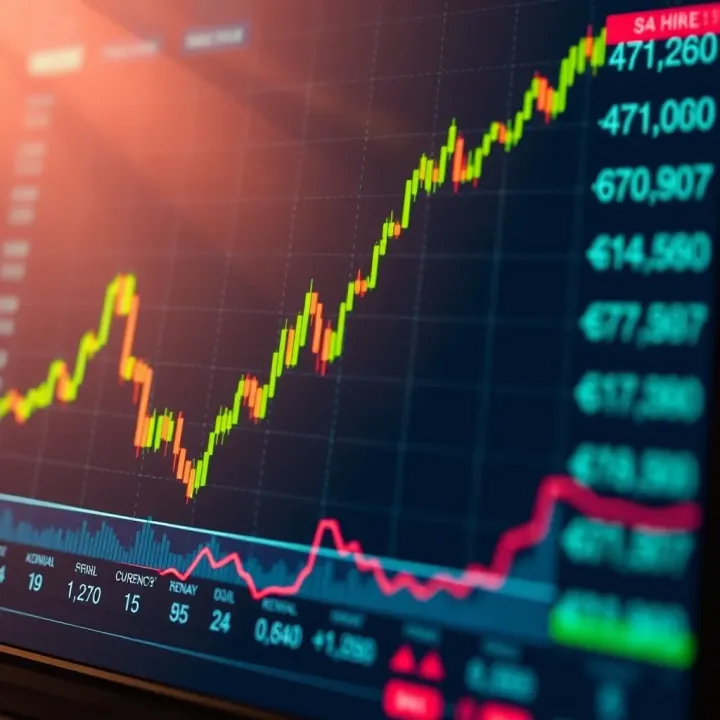
📈 Learn how to start forex trading in Kenya with practical steps, risk tips, and local resources. Master basic strategies to avoid common pitfalls and grow your KSh wisely.

📊 Learn how forex indices measure multiple currency pairs to give Kenyan traders a clear picture of market trends, trading tips, and risk management.
Based on 9 reviews